


The Future of Telemedicine: What Innovations Await Us in the Next 10 Years?
.png)
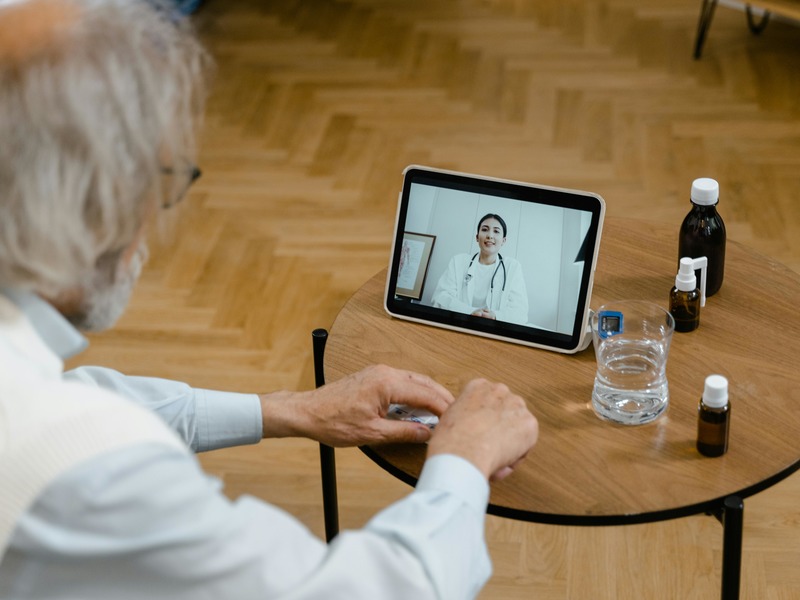
Telemedicine has already become an integral part of the modern healthcare system. Online consultations, remote health monitoring, and electronic medical records have significantly improved access to medical care. However, technology continues to evolve, and in the next ten years, even more significant changes await us. In this article, we will explore the key innovations that may shape the future of telemedicine.
1. Artificial Intelligence in Diagnosis and Treatment
Artificial intelligence (AI) is already being used to analyze medical data, but in the future, its role will become even more significant. Algorithms will be able to:
- Automatically interpret test results, CT scans, and MRIs.
- Assist doctors in making preliminary diagnoses.
- Predict the progression of diseases based on big data analysis.
With AI, doctors will be able to detect illnesses more quickly and accurately, reducing the burden on the healthcare system.
2. The Use of Virtual and Augmented Reality
Virtual reality (VR) and augmented reality (AR) are already being used in medical education, but in the future, they could also be integrated into telemedicine. For example:
- Doctors will be able to perform remote examinations using AR glasses, obtaining a detailed image of the patient’s body.
- Surgeons will be able to train on virtual models before performing operations.
- Patients with phobias or mental disorders will be able to undergo therapy using VR.
3. Wearable Devices for Health Monitoring
Today, fitness trackers and smartwatches are widely used to monitor physical activity, heart rate, and blood oxygen levels. In the coming years, even more advanced devices will emerge, capable of:
- Measuring glucose levels without the need for skin pricks.
- Monitoring hormone levels and metabolic processes.
- Detecting pre-heart attack and pre-stroke conditions in real time.
These devices will help detect diseases at an early stage and reduce the number of emergency hospitalizations.
4. Telesurgery and Remote Operations
The development of 5G technology and robotic surgery will allow complex operations to be performed remotely. This means that a surgeon will be able to control robotic instruments from anywhere in the world while operating on a patient in another country.
Telesurgery will be especially beneficial for residents of remote areas where highly qualified specialists are not available. Test surgeries are already being conducted, and in the coming years, this technology could become widespread.
5. Comprehensive Digital Medical Records and Blockchain
Today, many medical institutions maintain digital records of patients, but in the future, a fully integrated system will appear that will:
- Allow doctors to instantly access a patient's medical history.
- Eliminate duplicate tests and examinations.
- Improve coordination between different medical institutions.
The use of blockchain will make data storage more secure and resistant to hacking.
6. Telemedicine and Genetic Research
The decreasing cost of genetic analysis will lead to a more personalized approach to medicine. Doctors will be able to:
- Predict a patient’s predisposition to certain diseases.
- Develop individualized treatment plans based on DNA analysis.
- Prescribe medications tailored to a patient's specific genetic makeup.
When combined with telemedicine, this will make medical consultations even more precise and effective.
Conclusion
Telemedicine is rapidly evolving, and the next ten years will bring revolutionary changes to the healthcare system. Artificial intelligence, wearable devices, remote operations, and personalized medicine will make medical care more accessible, accurate, and efficient.
Although challenges remain, such as ensuring data security and regulating new technologies, the development of telemedicine opens up vast opportunities for humanity. In the coming years, we can expect a truly advanced medical future, where technology plays a key role in healthcare.



.png)
.png)



.png)


